IATA DGR 68th Edition: What Changes on 1 January 2027
Butterfly Training US · November 2, 2026
The IATA DGR 68th edition takes effect on 1 January 2027, and it changes how shippers, cargo acceptance teams, and passenger handling staff prepare and accept dangerous goods shipments and passenger-carried batteries. The edition carries amendments from the ICAO Dangerous Goods Panel and the IATA Dangerous Goods Board, touching everything from power banks in the cabin to marking rules on the warehouse floor.
This post walks through the changes that matter most for your team before the new year, from new power bank limits to the phase-out of the old lithium battery mark. We link the primary IATA source throughout so you can read the full technical detail.
What Is the IATA DGR 68th Edition?
The 68th edition of the IATA Dangerous Goods Regulations (DGR) applies from 1 January 2027. It includes amendments from the ICAO Dangerous Goods Panel and the IATA Dangerous Goods Board. You can read IATA’s own Significant Changes and Amendments to the 68th Edition for the full technical list.
The ‘How to use’ section of the DGR now explains applying special provisions to a shipment, choosing packing instructions and packaging types, and packing several dangerous goods in one package under the ‘All Packed in One’ approach.
Operator duties shift too. Under 1.2.7, the exception for dangerous goods carried on the aircraft now also covers equipment that keeps blood and blood components viable for transfusion, and the data logger exception now includes certain sodium-ion batteries. Operators must keep their manuals current and set procedures for dangerous goods that passengers and crew may carry only with approval (1.4.2), weigh fire risk and the ability to control a situation until a safe landing when deciding on that approval (new 1.4.3), and set requirements for passengers who ask for that approval (1.4.4).
Power Bank and Battery Rules for Passengers and Crew
Table 2.3.A is split into three tables in the 68th edition: 2.3.A (items that need operator approval), 2.3.B (items that do not need approval), and 2.3.C (items formerly in 2.3.A that passengers and crew may no longer carry). Table 2.3.C is transitional and is expected to be removed in the 70th edition.
Key limits for 2027:
• Power banks with lithium-ion batteries over 100 Wh are forbidden for passengers and crew (2.3.1.4).
• Passengers and crew may carry no more than 2 power banks (2.3.5.8).
• The limit on spare batteries drops from 20 to 18. An operator may allow more than 18 spare batteries, but never more than 2 power banks.
• Battery allowances for portable electronic devices are now clarified as ‘per device’.
Mobility aids get more attention too. Under 2.3.2.4, devices with lithium-ion batteries carry a stronger safety focus, and the amendments add requirements for operators where installed batteries exceed 300 Wh per device. A new paragraph, 2.3.0.9, addresses galvanically separated batteries carried by passengers. Section 2.5 now states that crew carriage and use of power banks for aircraft operations belongs in the operations manual, while personal use stays under 2.3.
Passenger handling teams should walk through these limits before January so gate and check-in staff recognize a forbidden power bank on sight. The HAZMAT for Passenger Handling Personnel 7.5 – DGR IATA Initial course covers this role.
What Changes for Shippers and Cargo Acceptance

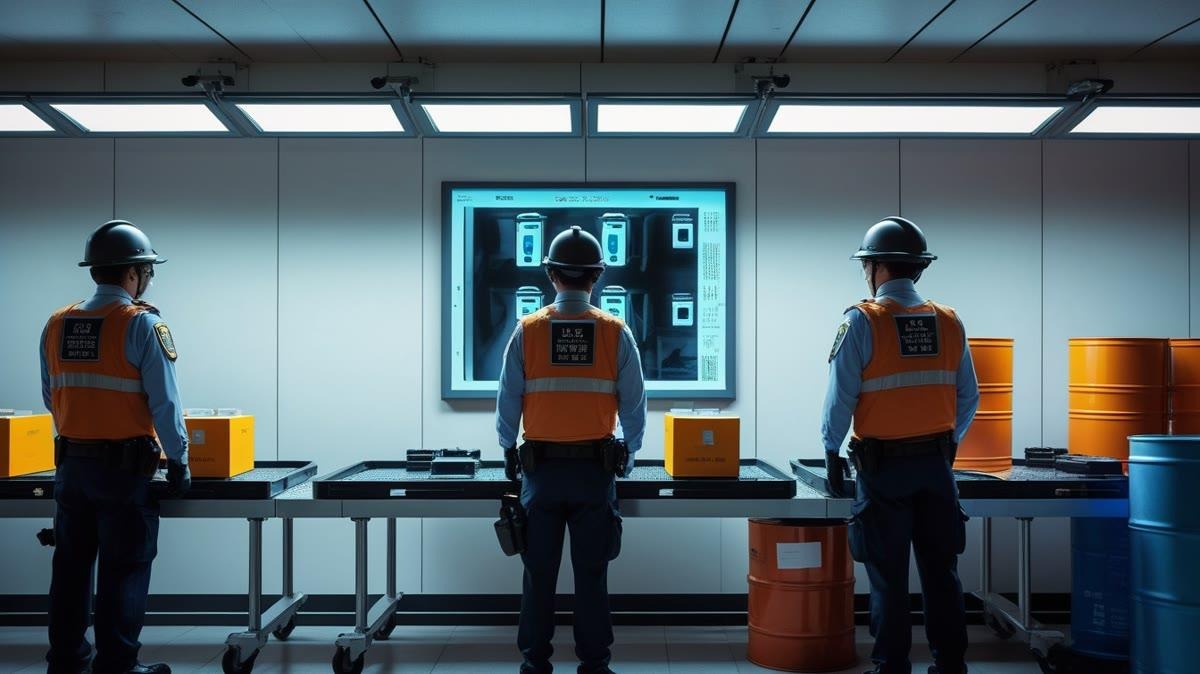
Cargo acceptance staff scanning air waybill labels on cargo packages at the acceptance desk, cargo warehouse.
Classification and the list of dangerous goods both move in the 68th edition. In Section 3, new paragraph 3.9.2.6.1(h) addresses hybrid batteries with lithium-ion and sodium-ion cells, 3.2.5.2.6 adds prohibitions for aerosols that also meet certain class, division, or packing group criteria, and 3.6.2.2.2.1.3 notes that States may issue added guidance on classifying infectious substances, for example UN 3373 against UN 2814 and UN 2900 during health emergencies.
Section 4 adds new UN numbers: UN 3561 and UN 3562 for chlorophenols, and UN 3563 and UN 3564 for lithium metal and sodium-ion batteries installed in a cargo transport unit. New special provisions include A235 (hybrid sodium-ion and lithium batteries), A236 (MRI machines), and A239, which replaces the removed A801. Special provision A808 states that phased-out UN numbers and proper shipping names stay in the list for 2 years. Several existing special provisions are amended, including A26, A103, A107, A185, A213, A214, A225, and A228, mostly to add sodium-ion batteries or heating machines alongside refrigerating machines.
Packing instructions change too. More than two dozen packing instructions are amended, many to add sodium-ion batteries and revise the text on prototype batteries. In PI 967, 970, and 978 Section II, button cells installed in the equipment no longer count toward the 4-cell or 2-battery package limit.
Elsewhere, 2.6.2.2 limits excepted quantity provisions to substances, not articles, and Section 2.8 carries new or changed State variations, including for New Caledonia and Norfolk Island, with operator variations reformatted and redundant ones removed. Check the variations that apply to each route before you ship. Section 9 also changes how explosives are segregated by compatibility group.
Shippers preparing dangerous goods declarations should review these changes against current procedures. The DGR Training – Shippers 7.1/7.2 (IATA) course is IATA Approved and valid for 24 months under IATA DGR 1.5. Cargo acceptance staff who check these shipments at the counter can review the HAZMAT for General Cargo Acceptance Personnel 7.2 – DGR IATA Initial course, from the team behind an IATA CBTA Center of Excellence.
Marking, Labelling, and the Old Battery Mark
Marking and labelling rules get several updates for 2027. The old lithium battery mark, the one with a space for a phone number, is phased out; shippers should use the current mark going forward. A package with the old mark should not be refused for that reason alone.
When a package needs both the battery mark and hazard labels, the battery mark goes on the same surface as the labels. For overpacks, the note on repeating marks is clarified with an example: not every mark on the packages inside an overpack needs to be repeated on the overpack itself.
The Shipper’s Declaration also changes. Under 8.1.6.9.2, the second sequence, step 6, of the declaration is reworded and restructured. Review a sample declaration with your documentation team so everyone recognizes the new wording before January.
Our HAZMAT Air Shippers Certification page has more on preparing shipping documents correctly.
How to Prepare Your Team Before 1 January 2027

Butterfly DGR course screen, online course start.
IATA’s list of significant changes for the 68th edition names no change to DGR 1.5, the training section of the regulations. That does not remove the value of reviewing the changes above before a new edition takes effect: your team still needs to recognize the new battery mark, the revised power bank limits, and the updated special provisions.
Steps to take before the deadline:
• Review table 2.3.A, 2.3.B, and 2.3.C with passenger handling and gate staff so they can explain the new power bank and spare battery limits to travelers.
• Walk cargo acceptance staff through the amended packing instructions and new UN numbers that affect your busiest shipment types.
• Confirm your shipping documentation templates match the reworded step 6 of the Shipper’s Declaration.
• Check the State and operator variations for every route you serve, since several changed for the 68th edition.
Our IATA Dangerous Goods Training page lists current course options by role. Train anytime, anywhere.
Frequently asked questions
When does the IATA DGR 68th edition take effect?
The 68th edition of the IATA Dangerous Goods Regulations applies from 1 January 2027. It carries amendments from the ICAO Dangerous Goods Panel and the IATA Dangerous Goods Board.
How many power banks can passengers carry under the 2027 rules?
Passengers and crew may carry no more than 2 power banks under 2.3.5.8 of the 68th edition. The spare battery limit drops from 20 to 18, though an operator may allow more than 18 spare batteries but never more than 2 power banks.
Will a package with the old lithium battery mark be refused?
The old battery mark, with a space for a phone number, is phased out and shippers should use the current mark. A package with the old mark should not be refused for that reason alone.
Does the 68th edition change dangerous goods training requirements?
IATA’s list of significant changes for the 68th edition names no change to DGR 1.5, the training section of the regulations.
What happens to UN numbers that are phased out in the 68th edition?
Under new special provision A808, phased-out UN numbers and proper shipping names stay in the list for 2 years.
The 68th edition touches passenger limits, cargo classification, packing instructions, and marking rules all at once. Review the changes above with your shippers, cargo acceptance staff, and passenger handling teams well before 1 January 2027, and point them to the role-specific courses linked throughout this post.
Train your team.