
DOT Hazmat Ground Shipper Training: Who Needs It and How It Works
Butterfly Training US · November 9, 2026
DOT hazmat ground shipper training is not optional paperwork for anyone who ships hazardous materials by highway – it is a condition of doing the job. Anyone who classifies, packages, marks, labels, loads, or signs for hazmat shipments is a ‘hazmat employee’ under the rule, and the employer carries the duty to see that training happens and gets documented.
This post walks through who needs the training, what 49 CFR 172.704 asks of the employer, how our self-paced online course fits into that picture, and what shipping managers need to keep on file once training is done.
Who Needs DOT Hazmat Training to Ship by Highway?

Warehouse drums with hazard labels, workers in safety vests.
The rule covers any employee who directly affects hazmat transportation: classifying the material, filling out shipping papers, packaging, marking, labeling, placarding, loading, unloading, or operating a vehicle used to transport the shipment.
If a job touches any of those tasks, that person is a hazmat employee under 49 CFR 172.704, even if hazmat shipping is only part of their day. A warehouse associate who spends most of a shift on general freight but occasionally tapes a label on a hazmat box still falls under the rule for that part of the job.
For a new hazmat employee, or one who moves into a new job function, the work can happen before training is finished only under the direct supervision of someone who is already properly trained and knowledgeable in that function. The new or reassigned employee then has 90 days after starting, or after the change in function, to complete training.
Shipping managers who move people between the dock, the paperwork desk, and loading duties should treat each move as a possible new training trigger, not just a schedule change. A single roster change can quietly create a new 90-day deadline that is easy to miss without a tracking system.
What Does 49 CFR 172.704 Ask of the Employer?
Under 49 CFR 172.704(a), hazmat employee training must cover:
• General awareness and familiarization training
• Function-specific training
• Safety training
• Security awareness training
• In-depth security training, for employers who must have a security plan under 49 CFR part 172, subpart I
Each of these pieces answers a different question for the employee: what hazmat is and why it is regulated, how to do their specific job within the rules, how to stay safe while doing it, and what to watch for from a security standpoint.
On timing, 49 CFR 172.704(c) sets two cycles. Recurrent training is due at least once every three years. In-depth security training follows the same three-year cycle, and also has to be redone within 90 days after a security plan is revised.
The full text of these requirements is at 49 CFR 172.704 on eCFR, and it is worth reading directly if your operation has to build its own security plan.
How the Hazmat Ground Shippers Certification Course Works
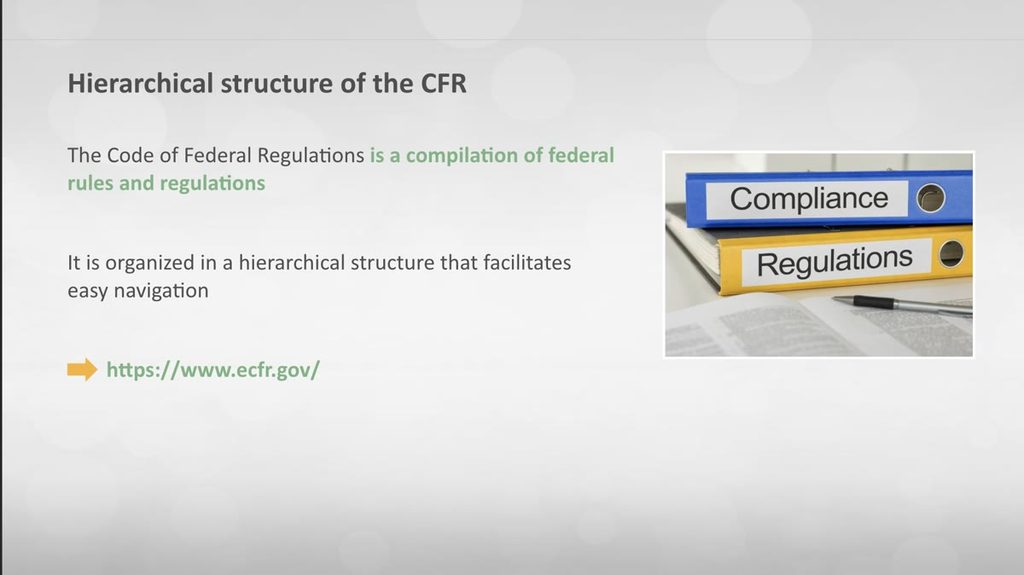
Butterfly hazmat ground course screen, the CFR.
Our Hazmat Ground Shippers Certification (DOT) is built to help shipping managers and hazmat employees meet the training piece of 49 CFR 172.704 without booking a classroom.
What the course looks like
• 100% online and self-paced, so an employee can finish it between shifts
• A final test at the end of the material
• A certificate valid for 36 months once the test is passed
The course runs $349 per attendee, at an introductory price through 31 December 2026. The price goes up starting in January 2027, so teams planning a batch of new hires or a recurrent training push next year may want to lock in seats before then.
If your shipments also move by air at any point, those employees need a different course track. The DGR Training – Shippers 7.1/7.2 (IATA) course and the IATA dangerous goods training page cover that side, and air dangerous goods training under IATA DGR 1.5 is valid for 24 months – a shorter cycle than the 36-month ground certificate. Teams that ship both ways should plan for two separate renewal clocks rather than trying to fold them into one date.
Keeping Training Records on File
49 CFR 172.704(d) puts the record-keeping duty squarely on the employer, not the training provider.
For each hazmat employee, the employer has to create and keep a record covering the preceding three years, and it has to include:
• The employee’s name
• The most recent training completion date
• A description, copy, or location of the training materials used
• The name and address of the training provider
• A certification that the employee was trained and tested
That record stays on file while the person remains a hazmat employee, and for 90 days after they stop, and it has to be shown to authorized DOT officials on request.
For shipping managers juggling several hazmat employees across shifts, it helps to see who is certified and who is due next, anytime, rather than digging through folders when an inspector asks. Our training and certification page lays out how that tracking works alongside the Hazmat Ground Shippers Certification (DOT) course itself, so completion dates and renewal windows stay visible in one place.
Planning Around the 90-Day and Three-Year Clocks
Two timing rules matter most for a shipping floor: the 90-day window for new or reassigned hazmat employees, and the three-year recurrent cycle for everyone already trained.
A practical way to manage both is to log two dates the moment someone starts touching hazmat tasks: the date they started that function, and the date their training record needs to show. That second date becomes the trigger for the next recurrent cycle three years out.
For employers who also carry a security plan under subpart I, add a third check: whenever that plan is revised, in-depth security training is due again within 90 days, independent of where someone sits in the regular three-year cycle.
Keeping these dates on a simple shared calendar, rather than in individual memory, is usually what separates a smooth DOT review from a scramble.
Frequently asked questions
Who counts as a hazmat employee under 49 CFR 172.704?
Anyone whose job touches hazmat transportation directly, including classifying, packaging, marking, labeling, loading, unloading, placarding, preparing shipping papers, or driving a vehicle carrying the shipment. The title on someone’s badge does not matter as much as the tasks they actually perform.
How often is recurrent hazmat training due?
49 CFR 172.704(c) sets recurrent training at least once every three years. In-depth security training follows the same three-year cycle and is also due within 90 days after a security plan is revised, for employers who must have one.
Can a new employee handle hazmat shipments before finishing training?
Yes, but only under the direct supervision of a hazmat employee who is already properly trained and knowledgeable in that function. The new or reassigned employee still has to finish training within 90 days of starting or of the job change.
Does the Hazmat Ground Shippers Certification course alone meet the whole rule?
The course is built to help meet the training requirements in 49 CFR 172.704. The employer still owns the record-keeping duties under 172.704(d), including names, completion dates, training provider details, and the testing certification, so training and record keeping work together.
Is ground hazmat training the same length as air dangerous goods training?
No. The certificate from the Hazmat Ground Shippers Certification course is valid for 36 months, while air dangerous goods training under IATA DGR 1.5 is valid for 24 months, so a shipper who does both needs to track two different renewal clocks.
Getting hazmat ground shipper training right comes down to two things: covering the five topics in 49 CFR 172.704(a) for the right people, and keeping the records that prove it. Our self-paced course handles the training side with a final test and a 36-month certificate, and it runs online so your crew can work through it between shipments. Train anytime, anywhere, and keep your record file ready before an inspector asks for it. Train your team.